
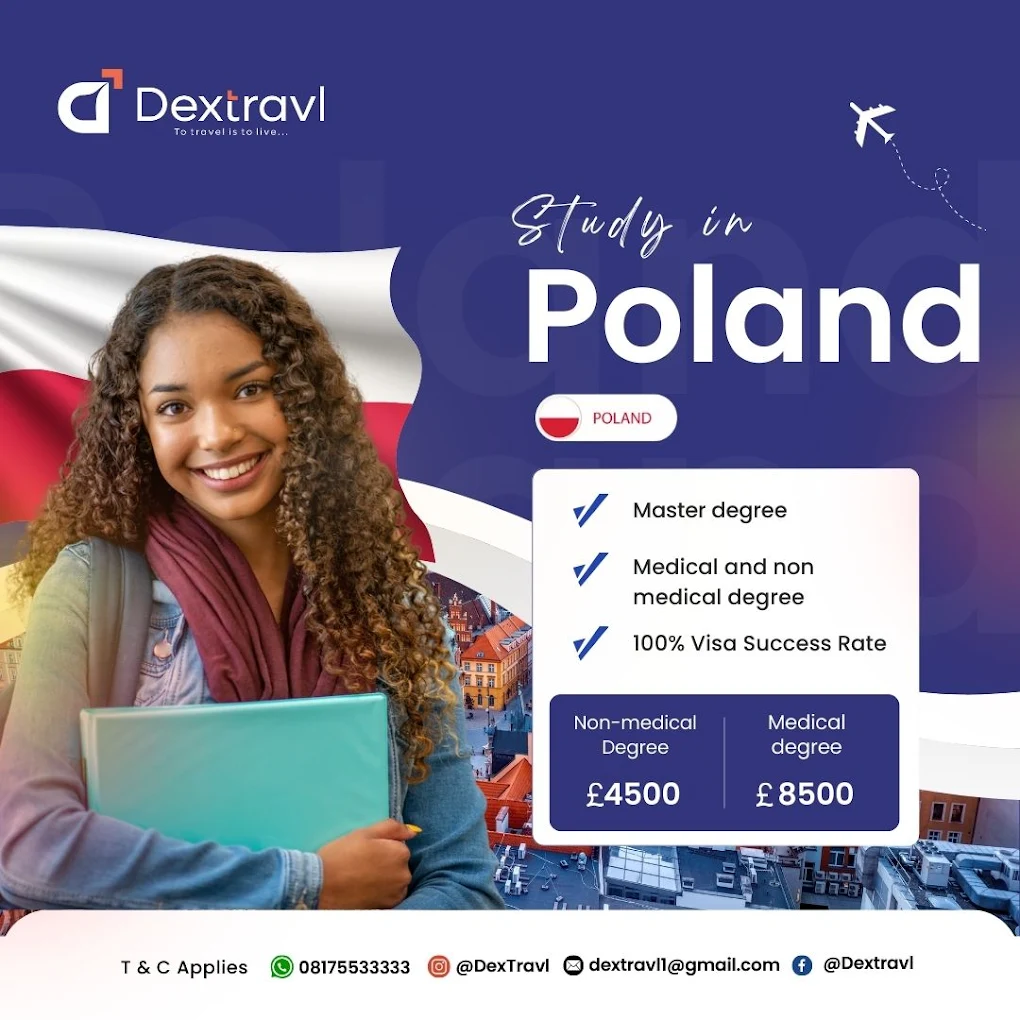
Poland is another affordable study destination for Nigerian citizens in Europe, with ₦10 million being sufficient for any program you wish to pursue. Interestingly, there are fewer language barriers and no racism issues, as people often portray Poland. You’ll also love Poland for its low living expenses and enormous job opportunities for international students and graduates, especially in the IT and construction sectors.
In this comprehensive guide, you’ll discover what it takes to study in Poland from Nigeria, including its long-term benefits, requirements, and application processes.
With a top Nigerian travel agency like DexTravl, you can easily secure admission to any higher education institution in Poland and obtain a D-type national visa (Poland’s visa for study purposes). Our travel consultants will guide you through the entire process, helping you choose the right school, prepare all the necessary documents, and ensure a smooth arrival in Poland.
Why study in Poland from Nigeria?
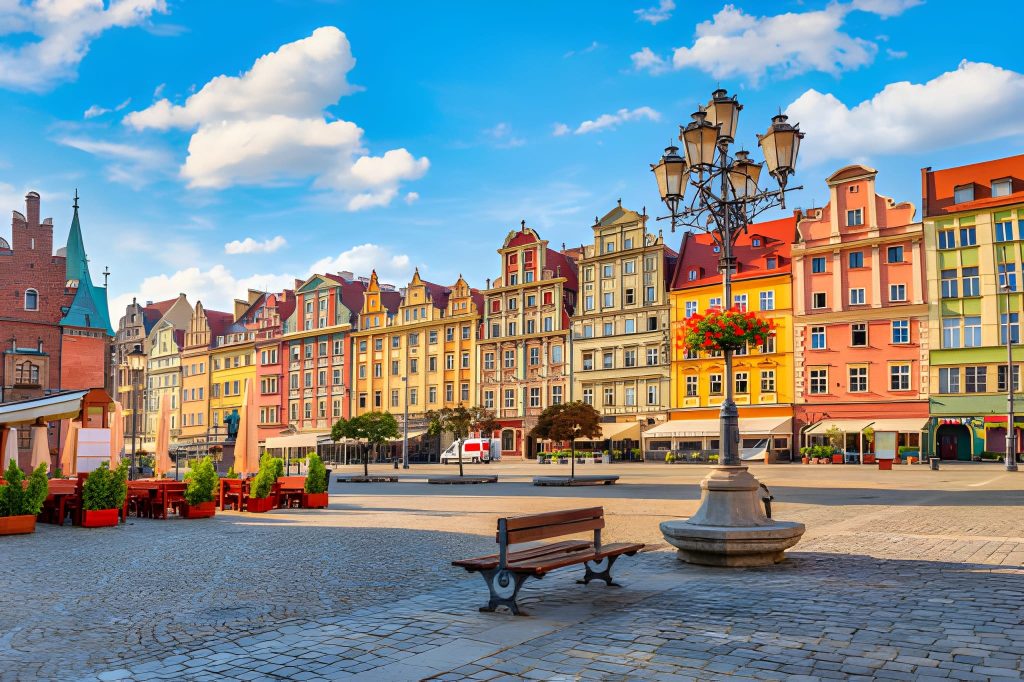
Many Nigerian citizens can’t fathom why university graduates and families with children choose to study in Poland, rather than other top study destinations in Europe. Below are some good reasons to back up your decision:
- Affordable tuition fees, starting from ₦3.5 million to ₦10.5 million, for top-quality, English-taught programs in Poland.
- A great community of Nigerian citizens, as reports prove that over 100,000 of Poland’s population are of Nigerian nationality.
- Many universities in Poland, such as Jagiellonian University, University of Warsaw, and the Sopot University of Applied Sciences, are highly ranked globally.
- Low living expenses, as you need between ₦600,000 and ₦1.2 million to cover these costs and live comfortably in Poland.
- Easy entry to other EU countries due to its close proximity. Hence, you can access nearby countries like Luxembourg, Malta, France, Germany, and Spain.
- Great diversity of cultures, food, and tourist attractions, making studying more fun and enlightening.
Common challenges and how to overcome them
Below are various challenges you’ll likely encounter while studying in Poland as a Nigerian national:
- Difficulty conversing with the locals due to a language barrier: Polish is widely spoken in most parts of Poland, posing significant challenges for Nigerian students seeking employment outside campus and in communicating with the locals.
Therefore, it is advisable to learn basic Polish to make your life in Poland easier upon arrival as an international student.
- Weather differences: Summer is usually very cold in Poland, which can be uncomfortable for many Nigerian citizens. We recommend packing enough sweaters, coats, gloves, and socks to protect your body and keep you warm in the mild weather.
- Homesickness: Although the people of Poland are accommodating and do not discriminate against Nigerians and other students of African descent in any way, they often stay indoors and do not make friends quickly with foreigners.
Hence, you may feel lonely when you arrive for studies in Poland and will need to overcome homesickness to foster independence.
Cost of studying in Poland for Nigerians
Here’s a list of the major expenses Nigerian students incur while studying in Poland and their estimates:
- Tuition fees: start from €350 or €700 (around ₦600,000 or ₦1.2 million) per year, depending on the school and program.
- Accommodation: €300 to €450 (₦522,000 to ₦783,000) per month.
- Food and groceries: €150 to €300 (₦261,000 to ₦522,000) per month.
- Health insurance: €15 (₦26,100) per month.
- Public transit: €20 (₦35,000) per month.
Requirements to study in Poland from Nigeria
To secure admission into any university in Poland, you must apply to the institution with the following documents:
- A photocopy of a valid international passport’s bio-data page.
- One passport-size photo of you.
- Properly filled-out university admission application form.
- WAEC or NECO exam results or certificate – For undergraduate studies.
- Bachelor’s or master’s degree certificate – For graduate studies.
- Official transcripts of previous study.
- Proof of English language proficiency, such as an IELTS or TOEFL score report (required by only a few schools and programs.)
- Personal statement.
Eligibility requirements for a Polish study visa (D-Type national visa)
To obtain a D-Type national visa to study in Poland, you must possess the following documents:
- A filled-out and signed visa application form printed via the e-konsulat system.
- A colored photograph of you, sized 3.5 x 4.5 cm,
- A valid international passport issued within the previous ten years.
- A photocopy of your passport bio-data page.
- Copy of round-trip flight ticket to Poland.
- Travel medical insurance.
- A valid Nigerian ID to prove legal residence in Nigeria.
- Proof of funds to demonstrate enough subsistence, such as an original bank statement, scholarship documents, or sponsorship letter.
- Evidence of reserved accommodation in Poland, such as a tenancy agreement.
- Proof of acceptance issued by a Polish university.
How to Study in Poland from Nigeria
Nigerian students can pursue their Bachelor’s, Master’s, and PhD degrees at any university in Poland, although student experiences may differ. Regardless of your academic achievements and current level of study, you can further your education in Poland by applying for admissions, a D-Type national visa, and a residence permit, one after the other.
At Dextravl, we can represent you in every step of the way, helping you handle each application with precision. We’re just a call away and are available 24/7 on WhatsApp.
Final Thoughts
With our consultation and professional travel services, your dream of studying in Poland is achievable and can potentially lead to permanent residency later on. You need less than ten million Naira to cover your study and living expenses for the first year of study.
Scholarship opportunities, like the Stefan Banach Scholarship Program, are available to cover your tuition and other study-related costs. You can also work up to 20 hours weekly to support yourself throughout your studies, with the privilege to increase your working hours during school breaks and holidays.